How to Become a GTM Engineer: Skills, Tools and Career Path

Learn to move revenue data between tools with code and automation, then prove it with shipped projects. Most GTM engineers come from SDR, RevOps or growth roles and add four skills: data enrichment, CRM and API work, workflow automation and AI agents. A 90-day plan and three portfolio projects are enough to start applying.
Key points
A GTM engineer builds the systems that find, enrich, route and contact buyers, so sellers spend their time selling.
You do not need a computer science degree. You need SQL, one automation tool, comfort with APIs and a commercial reason for every build.
The fastest path runs through a 90-day plan: data first, then automation, then AI agents with approval steps.
Hiring managers judge you on shipped work. Three documented projects beat a list of certifications.
The role leads on to AI engineer, forward deployed engineer and Chief AI Officer tracks.
What is a GTM engineer?
A GTM engineer builds automated revenue systems: the lists, enrichment, routing, outreach and reporting that sit between marketing, sales and the CRM. I cover the full definition in what is a GTM engineer; this guide is about how to become one.
Clay, the data enrichment platform, says it coined the role in 2023 and defines GTM engineering as "the practice of building automated revenue systems using AI, data enrichment, and workflow automation." Clay describes the right hire as "half commercial thinker, half builder."
The role overlaps with RevOps and sales ops, but the output is different. RevOps keeps the process and the reporting healthy; a GTM engineer writes the automations that run inside it. If you are deciding between them, read GTM engineer vs RevOps vs sales ops.
Is there demand for GTM engineers?
Yes, and it is growing fast from a small base. Job data company Bloomberry analyzed GTM engineering job posts and found 2025 postings up 205% year over year for January to September.
The same analysis gives a median salary of $127,500 across posts with public pay ranges, and an average experience requirement of 4.11 years. Treat those as a snapshot of posts with listed ranges, not a market-wide figure.
Two more findings from that dataset matter for learners:
Coding shows up, but not everywhere. SQL and Python each appear in 38% of postings.
Tool lists are familiar. HubSpot appears in 52% of posts, Outreach in 49%, Salesforce in 45%, Zapier in 39% and n8n in 28%, with Clay named as the most common tool.
Where do GTM engineers come from?
Most come from commercial roles and learn the technical side, not the other way round. Bloomberry's review of 100 GTM engineer LinkedIn profiles found SDR or BDR was the most common prior role, followed by RevOps or sales ops, early-startup generalist, marketing or growth, and technical backgrounds last.
Clay's own account of how it built its GTM engineering function says many of its forward-deployed GTM engineers "came from rev ops or growth roles."
Each background starts with a different gap to close:
Starting background | What you already have | What to learn first |
|---|---|---|
SDR or BDR | Buyer knowledge, outreach instincts, list pain | SQL, enrichment waterfalls, CRM data model |
RevOps or sales ops | CRM admin, process design, reporting | APIs, webhooks, scripting in Python or JavaScript |
Growth or demand gen | Experiments, attribution, landing pages | CRM objects, routing logic, outbound systems |
Data or analytics | SQL, modeling, dashboards | Sales motions, ICP design, outreach tools |
Software engineering | Code, APIs, version control | Pipeline math, buyer research, how sellers work |
What skills does a GTM engineer need?
You need five skill areas, and you need to be useful in all of them before you are deep in any one.
Data and enrichment
Build accurate account and contact lists from several sources, then fill gaps with an enrichment waterfall: try one provider, fall back to the next, and log which one answered. Learn SQL well enough to join, dedupe and filter. freeCodeCamp keeps a list of free beginner SQL courses that covers SQL, PostgreSQL and MySQL.
CRM and APIs
Know the CRM data model: accounts, contacts, opportunities, owners and the fields that drive routing. Then learn to read and write that data through the API, not just the admin screen. Start with webhooks, which Zapier describes as "automated messages sent from apps when something happens."
Automation tools
Pick one visual tool and get fluent: triggers, branches, loops, error handling and retries. My comparison of Relevance AI vs n8n vs Zapier covers which fits which kind of workflow.
AI agents, prompts and evals
Write prompts that read from a source of truth, and test them on past examples before they touch a buyer. Anthropic's guide to building effective agents recommends "finding the simplest solution possible, and only increasing complexity when needed," and says the key to success is "measuring performance and iterating." An eval can be as simple as 20 past inputs, the output you wanted and a pass or fail column.
GTM strategy
Know the ICP, the sales motion and the pipeline math well enough to say no to a build. A technically clean workflow that books meetings with the wrong accounts is a cost, not an asset.
What tools should a GTM engineer learn first?
Learn one tool per layer, then add more only when a project needs them. This is the starter stack I would give someone in their first 90 days.
Layer | Learn first | Why | Add later |
|---|---|---|---|
Data and enrichment | Clay | Most-named tool in GTM engineer posts | A second data provider |
Querying | SQL (PostgreSQL) | Joins, dedupes and audits any list | Python for scripts |
CRM | HubSpot free CRM | Free tier and open API to practice on | Salesforce sandbox |
Automation | n8n or Zapier | Webhooks, branches, retries | Relevance AI for agents |
AI models | Claude | Drafting, research and classification steps | OpenRouter for model choice |
Knowledge and logs | Notion | Holds ICP, rules and a run log | A warehouse table |
Approvals | Slack | Where a person signs off before anything sends | Approval steps in your automation tool |
Approval steps are worth learning early. n8n's human-in-the-loop for tools lets you "require human approval before an AI Agent executes a specific tool," with reviews in Slack, Gmail, Microsoft Teams and other channels. If the reviewer denies it, "the action is canceled and doesn't run."
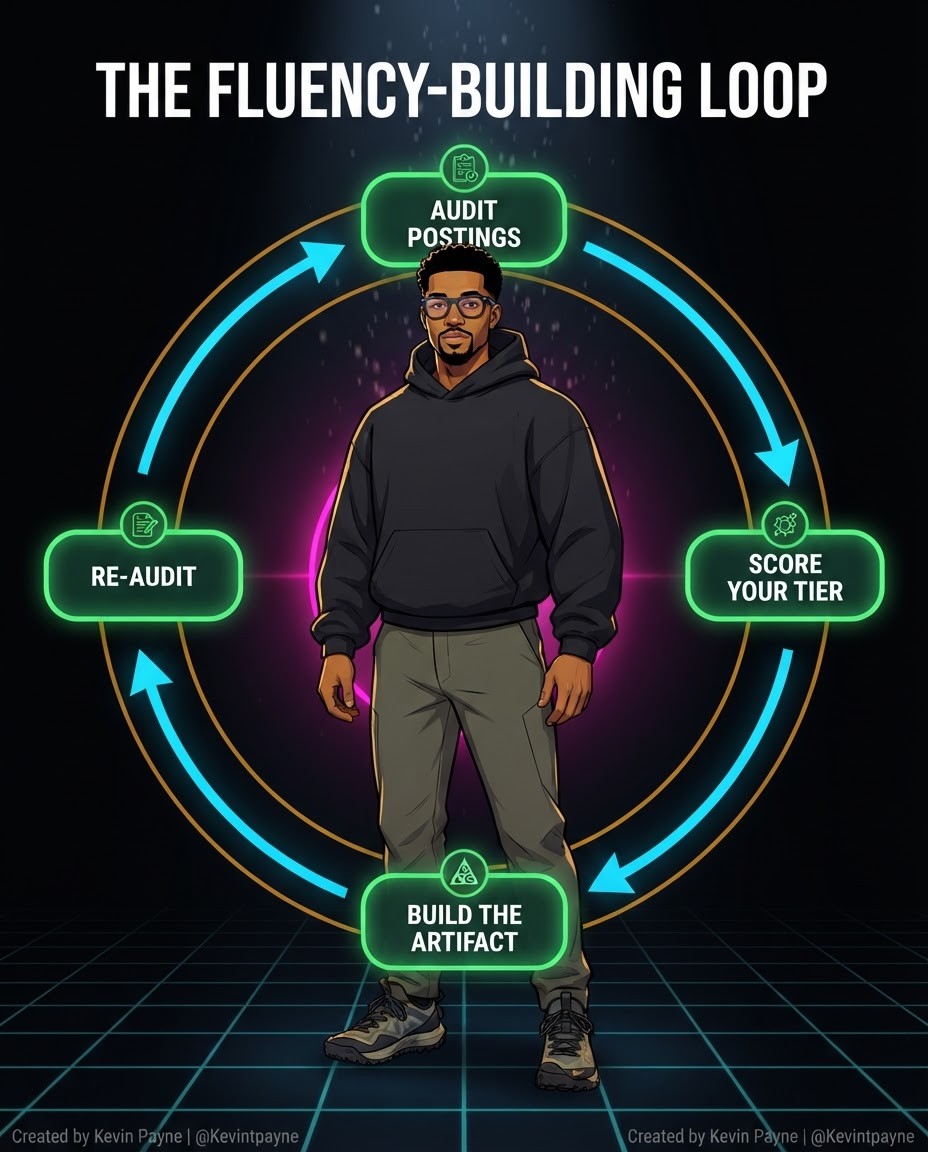
A simple way to keep learning aimed at real roles: audit job postings, score where you stand, build an artifact that closes the gap, then audit again.
What does a 90-day learning plan look like?
Spend 30 days on data, 30 on automation and 30 on AI and shipping. This plan assumes five to eight hours a week.
Days 1 to 10: SQL basics. Learn SELECT, JOIN, GROUP BY and window functions on a free dataset. Write ten queries that dedupe and rank a list of companies.
Days 11 to 20: CRM data model. Set up a free HubSpot account, import 200 test companies and contacts, and map which fields would drive routing.
Days 21 to 30: Enrichment. Build a list for a narrow ICP, enrich it from two sources and record the fill rate for each field.
Days 31 to 45: First automation. Use a webhook to send new form fills into the CRM, enrich them and assign an owner. Add error handling and a retry.
Days 46 to 60: Outbound sequence logic. Route enriched contacts into a sequence by segment. My guide to building an AI outbound system shows the full flow.
Days 61 to 75: AI steps with evals. Add a model step that writes a first line or classifies fit. Test it on 20 saved examples and keep a pass rate.
Days 76 to 90: Approval and logging. Put a Slack approval before anything sends, log every run to Notion and write up the project.
The loop engineering guide covers how to make a workflow review and improve its own runs, which is a good stretch goal for the last two weeks.
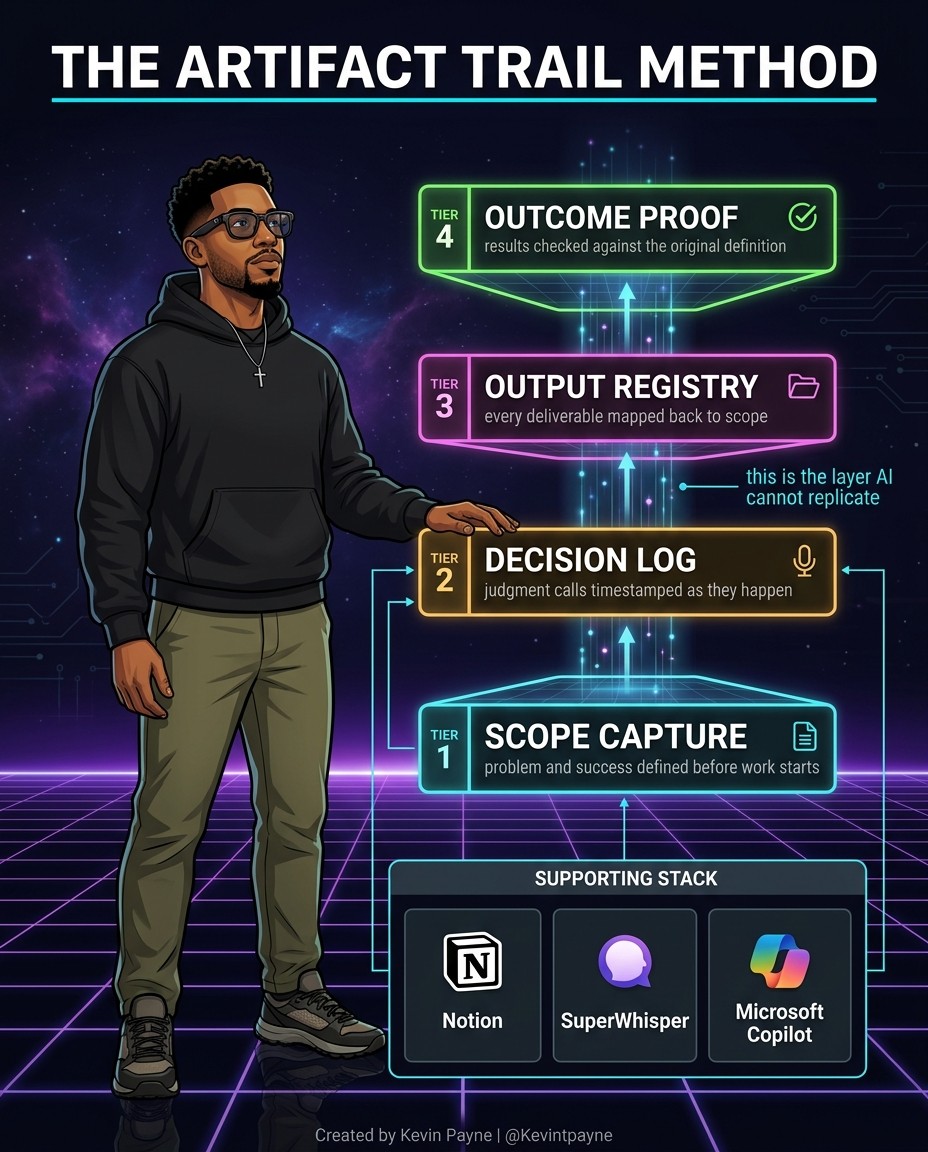
Each portfolio project is stronger with a trail behind it: the scope you captured, the decisions you logged, the outputs you shipped and proof of the outcome.
How do you build a GTM engineer portfolio?
Build three projects that each solve one revenue problem end to end, and document them like a client handoff. Each should show a trigger, the tools, the logic, an approval point and a measured result on test data.
An enrichment and scoring pipeline. Take a raw list, enrich it from two sources, score it against a written ICP and push the top tier to the CRM. Show fill rates and the scoring rules.
An inbound routing and response workflow. Capture a form fill or chat, enrich it, qualify it and route it to the right owner with a drafted reply. The AI chat agents for inbound lead qualification guide shows the qualification logic.
An AI research and outreach agent with evals. Research an account, draft a first line, test it against saved examples and require approval before sending.
For each project, publish a short write-up: the problem, a diagram, the stack, what broke and what you changed.
Use illustrative numbers if you lack real data, and label them. For example: "On a 500-row illustrative list, the waterfall raised email fill from 60% to 85%."
How do you get hired as a GTM engineer?
Apply where your background is an advantage, and lead with your portfolio, not your title history. An SDR moving into GTM engineering should target teams that run outbound at volume; a RevOps lead should target teams with messy CRMs.
The job search
Search the title and its neighbors. Look for GTM engineer, growth engineer, revenue systems engineer and RevOps engineer.
Read the tool list. If a post names Clay, n8n and HubSpot, rebuild one of your projects in that stack and say so in your application.
Show work in public. Post a short breakdown of each project on LinkedIn. Communities such as RevGenius and the Clay community are good places to share builds and meet hiring managers.
The interview take-home
Expect a build task at some teams. Treat it as a small client project:
Restate the goal and the metric before you build.
Ship the simplest working version, then list what you would add with more time.
Show your error handling and approval step. Teams want to know you will not email the wrong list.
Write the handoff: inputs, outputs, costs per run and how someone else maintains it.
What is the career path after GTM engineer?
GTM engineering is a strong base for three AI-heavy tracks, because you already build systems that touch money and customers.
Next role | What changes | Skill to add |
|---|---|---|
AI engineer | Builds AI systems across the business, not just revenue | Evals, retrieval, model APIs, production code |
Forward deployed engineer | Builds custom solutions inside customer accounts | Scoping, client communication, fast prototyping |
Chief AI Officer | Owns AI strategy, budget and governance | Portfolio planning, security reviews, change management |
Clay already splits its GTM engineers into internal and forward-deployed roles, where forward-deployed engineers "help prospects evaluate Clay, scope implementations, and build out their specific use cases." That is the same shape as forward deployed engineering in AI companies.
The move up usually comes from widening scope. Once you have automated one team, the AI operating system for B2B teams is the next layer: one shared knowledge base, tool access, approvals and logs across every workflow. The AI automation maturity ladder is a useful frame for deciding which workflows earn full automation.
What are the most common mistakes?
Most people stall on scope and proof, not on skill. These are the patterns I see most in the GTM engineering work I do with clients and with people moving into the role:
Collecting tools instead of shipping projects. Ten tool certificates prove less than one working pipeline with a write-up.
Skipping SQL. You cannot audit a list, a dedupe or a report without it.
Automating a broken process. If routing rules are unclear by hand, automation sends the mess faster.
No approval step on outbound. One bad send to a full list costs more than every hour the workflow saved.
No evals on AI steps. A prompt that worked on three examples can still fail on the hundredth.
Measuring activity, not outcomes. Report meetings booked, hours saved and pipeline, not rows enriched.
FAQ
Do I need to know how to code to become a GTM engineer?
You need SQL and enough Python or JavaScript to read API responses and write small scripts. Bloomberry found SQL and Python each named in 38% of postings, so code helps but many roles lean on visual tools.
How long does it take to become a GTM engineer?
From an SDR or RevOps role, about 90 days of focused practice gets you to three portfolio projects.
What does a GTM engineer earn?
Bloomberry's analysis of posts with public ranges gives a median of $127,500. Pay varies widely by company stage and location.
Is Clay required to become a GTM engineer?
No, but it is the most common tool in job posts. Learn the enrichment logic first; it carries over to any data tool.
Is GTM engineer the same as RevOps?
No. They overlap, but a GTM engineer builds the automations while RevOps owns process, systems and reporting. See GTM engineer vs RevOps vs sales ops for the full breakdown.
What should my first GTM engineering project be?
An enrichment and scoring pipeline. It uses data, a CRM and simple automation, and every hiring manager understands the result.
Talk through your GTM engineering path
If you are moving into GTM engineering or hiring your first GTM engineer, book an intro call and we can map your next project or role. If you are a hiring manager who wants to know what manual work one would remove first, start with the free Leak Call.
About the author: Kevin Payne is an AI engineer and GTM operator who installs AI workflows for B2B teams. He has 10+ years in B2B SaaS demand generation and RevOps across Techstars, a16z and YC portfolio companies, and his writing has appeared in HubSpot, GetResponse, Outbrain and more.