How to find a RevOps mentor

Find a RevOps mentor where operators already gather: structured programs inside communities such as Pavilion and RevOps Co-op, free platforms like ADPList, paid marketplaces like MentorCruise, and tool user groups for Salesforce and HubSpot. Shortlist three to five people one or two steps ahead of you, send a short specific ask, and bring a real problem to the first session.
Mentors usually come from the rooms you already spend time in, which is why this guide sits inside the bigger map of the best communities for GTM engineers, RevOps operators and B2B creators. Start there if you have not picked your rooms yet.
Key points
The fastest routes are structured programs inside communities you join anyway, plus free mentor platforms.
Pick mentors one or two career steps ahead of you, not the most famous name in your feed.
A good ask is short, names one specific problem, and requests one 30-minute call, not an ongoing relationship.
Bring a written problem, your current system and one decision you need to make to every session.
Paid mentorship buys reliability and accountability; free mentorship buys range. Many operators use both.
Where can you find a RevOps mentor?
The best places are communities with a formal mentorship or matching program, free mentor platforms, paid mentor marketplaces and tool user groups. Each one suits a different stage and budget.
Community programs
Pavilion. Pavilion's blog post on its mentorship program describes "Pavilion's 12-week mentorship program," which pairs "Associates members as mentees with Executive member mentors." It says pairs are matched "based on complementary experiences rather than identical backgrounds," and that members apply through the Member Hub for an upcoming cohort. A Pavilion case study on mentorship for rising GTM leaders describes the structure as "biweekly meetings, Slack integration, and conversation prompts."
RevOps Co-op. The Rise membership page lists "Monthly career coaching" with "1-1s with co-founder Matt Volm" and "Peer-to-Peer Matching" for "1-1 connections with members." As of October 2026 it shows a price of "$63/mo" with a "30-day free trial, billed annually with an annual commitment thereafter."
Mentor platforms
ADPList. The ADPList homepage says it is "free to start, with free sessions available" and "connects people across 160+ countries." Its mentors span "design, product, engineering, marketing, data, and more," so search by skill, such as marketing operations or data, rather than by job title.
MentorCruise. The MentorCruise homepage lists "7,300+" mentors as of October 2026 and offers to "try your first call for free with every mentor you're meeting." After that, it describes "a low-cost, monthly mentoring subscription" with chat and calls.
Tool user groups
Salesforce. Trailblazer Community Groups say you can "learn Salesforce with your peers, build your network, and find mentors," with groups organized by location, job function or topic.
HubSpot. The HubSpot User Groups page describes HUGs as "free, community-led groups that host regular virtual and in-person events," with "over 100 virtual and local communities to choose from" and "a mixture of education and networking at each event."
For the Slack side of this, the guide to Slack communities for RevOps and GTM people lists where operators talk day to day, and where Clay, Salesforce and HubSpot users talk covers the tool-specific rooms.
How do the options compare?
Formal programs give structure, platforms give choice, and user groups give proximity to people who run the same stack as you. The table summarizes what each source's own page states, as of October 2026.
Source | Format stated on its page | Cost stated on its page | Best for |
|---|---|---|---|
Pavilion mentorship | 12-week program; Associates paired with Executive members | Membership required; no program fee stated | Rising leaders who want structure |
RevOps Co-op Rise | Monthly career coaching 1-1s plus peer matching | $63/mo, billed annually, 30-day free trial | Operators who want peers and coaching in one place |
ADPList | One-on-one online sessions you book with a chosen mentor | Free to start, free sessions available | Testing several mentors quickly |
MentorCruise | Monthly subscription with chat and calls; one-off sessions | First call free with each mentor; then paid | A steady mentor with regular check-ins |
Trailblazer Community Groups | Peer groups by location, function or topic | No fee stated | Salesforce admins and ops people |
HubSpot User Groups | Peer-led virtual and in-person events | Free | HubSpot operators |
A common pattern is a free platform to test fit, plus one community you show up in every week.
How do you shortlist the right mentor?
Shortlist three to five people who solved the problem you have now within the last few years. Someone one or two steps ahead remembers the details; a CRO ten years past your stage may not.
Use this filter before you send any message:
Name your next step. Write one line: "In 12 months I want to be X." Examples include owning the CRM, leading RevOps, or moving into GTM engineering.
Match on the gap, not the title. If the gap is technical, look for operators who build. The GTM engineer skills matrix helps you name which skill is missing.
Check public work. Read their posts, talks or community answers. You want someone who explains clearly, because that is most of mentoring.
Check their stack. A mentor who has run the same CRM and the same sales motion as you saves translation time.
Check availability signals. Mentors listed on ADPList or MentorCruise, or who answer questions in community channels, have already said yes to helping.
A simple scoring sheet
Score each candidate from 1 to 3 on four criteria. This is an illustrative method, not a standard.
Criterion | 1 | 3 |
|---|---|---|
Relevance of their path | Different function | Made the exact move you want |
Stack overlap | Different CRM and motion | Same CRM and motion |
Clarity of public work | Little public writing | Regular, clear posts or answers |
Availability | No sign they mentor | Listed on a platform or active in programs |
Reach out to the top three first. If you are heading toward GTM engineering, pair this with the plan in how to become a GTM engineer so the mentor sees where you are going.
Before you reach out, it helps to know how the people you admire work; how top GTM operators work pulls habits from their own interviews.
How do you write the ask?
Keep it under 100 words, name one specific problem, explain why you picked them, and ask for one call.
An illustrative template you can adapt (swap in your own details):
Hi [Name], I am a RevOps manager at a Series B SaaS company running Salesforce and a sales team of about 20 reps. I read your post on territory planning and it matched a problem I am stuck on: our lead routing breaks every time we add a segment. Would you be open to one 30-minute call in the next few weeks? I will send a one-page summary of the setup beforehand so we use your time well. No worries if the timing does not work.
Why it works:
Context in one sentence. Role, stage and stack, so they can judge fit.
Proof you did your homework. A specific piece of their work, not a compliment.
One problem. Narrow enough to answer in a call.
A small, time-boxed request. One call, not "will you be my mentor."
An easy exit. People reply more readily when declining is painless.
On Slack, the same rules apply but shorter. The guide on how to network in a Slack community covers when to DM and when to answer in channel first.
What should you bring to the first session?
Bring one written problem, a picture of your current system and one decision you need to make. Mentors give better answers to concrete setups than to "how do I grow in RevOps?"
A first-session checklist:
A one-page brief: role, team size, CRM, sales motion, and the problem in three sentences
A diagram or screenshot of the process you are stuck on, with anything confidential removed
What you already tried and what happened
The one decision you need to make in the next 30 days
Two questions about their own path
A note-taking doc, so you can send a short follow-up with what you will try
End the call by stating your next action and asking whether you can send a two-line update after you try it. That follow-up is how a single call becomes a mentoring relationship.
Most problems operators bring to a mentor are the same few: leads routed to the wrong rep, a CRM nobody trusts, and pipeline reports built by hand every Monday. This is the operator side of my work: I build these systems for my own work and do the same for SaaS revenue teams (lead routing, CRM cleanup, pipeline reporting) in a 90-day AI RevOps Sprint for Series A and B SaaS. Contact me to get yours scoped.
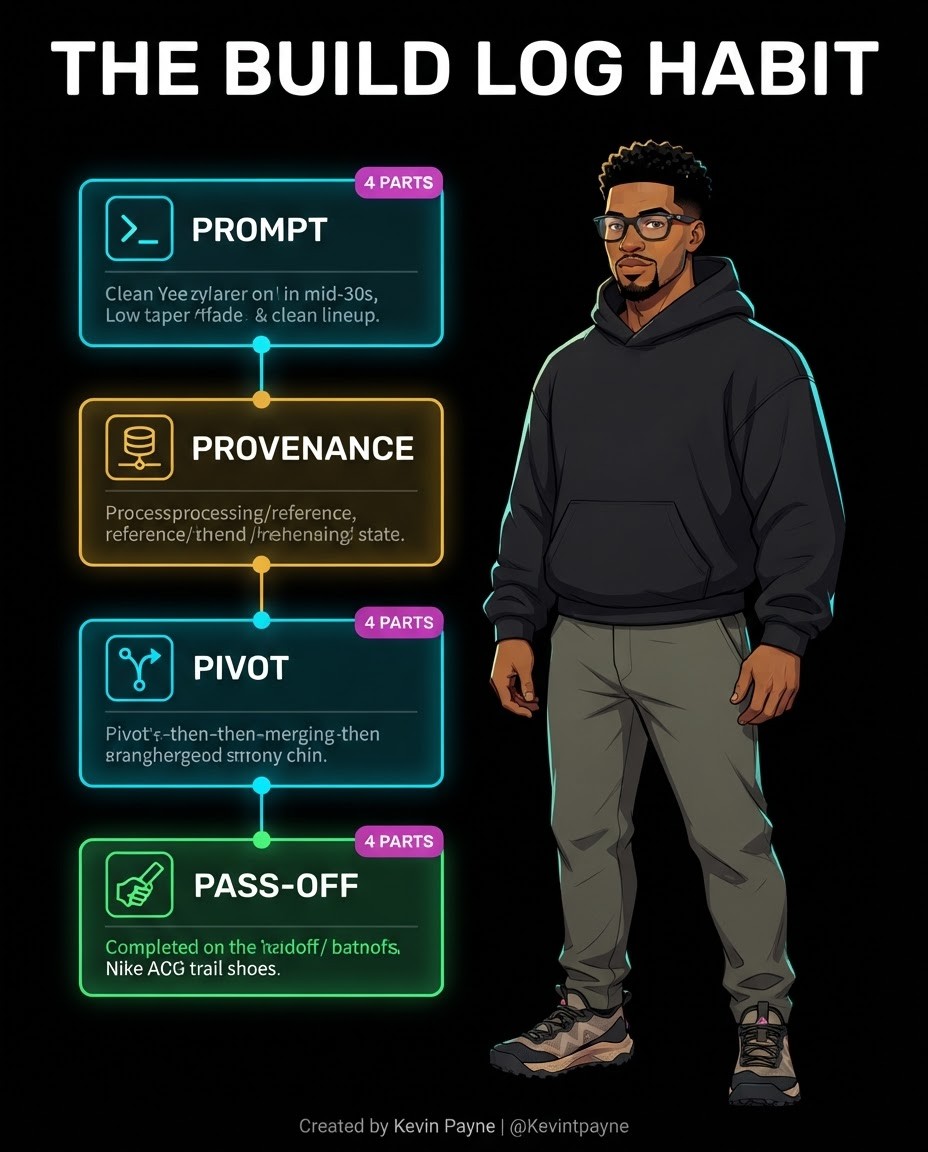
A running build log gives every session real material: what you tried, why, what changed and what you handed off.
Is paid mentorship worth it over free?
Paid mentorship is worth it when you need a regular cadence and accountability; free mentorship is better for range and early testing. The choice depends on how often you need help, not on which is "better."
Factor | Free (ADPList, user groups, community peers) | Paid (MentorCruise, paid community tiers) |
|---|---|---|
Cadence | Ad hoc, depends on availability | Set by the plan or program |
Range | Many mentors, short calls | One mentor, deeper context |
Accountability | Mostly on you | Built into recurring sessions |
Best stage | Exploring, testing fit | Mid-transition, specific goal |
An illustrative way to decide: if you expect to need help every two weeks for three months on one goal, such as moving from sales ops into RevOps leadership, a structured paid option tends to fit. If you need a different expert view each month, rotate free mentors.
The same trade-off applies to communities as a whole, which the guide on whether a paid community is worth it breaks down further.
How do you keep a mentor relationship going?
Keep it going by making it easy to help you: short updates, clear progress and gratitude that names what changed. Most mentoring relationships fade because the mentee goes quiet, not because the mentor loses interest.
Habits that work:
Send a two-line update after you act on advice. What you tried and what happened.
Ask for the next call only when you have something new. A fresh problem or result gives them a reason to say yes.
Give back in public. Share what you learned in a community thread, crediting them if they are comfortable with it.
Offer something small. A template, a teardown of a tool, or an intro. Mentoring runs both ways.
Set an end point. Pavilion's program runs 12 weeks and its post notes that "relationships can evolve beyond the program based on mutual interest." A natural end point keeps either side from feeling stuck.
If you are preparing for a role change, the GTM engineer interview audit is a useful thing to walk through with a mentor before you apply.
What are the common mistakes?
The most common mistake is asking a stranger "will you be my mentor?" before any context. Most of the others come from vague asks and no follow-through.
Asking for a relationship instead of a call. Commitment comes after one useful conversation, not before.
Picking by follower count. The most visible operators get the most requests. Someone two steps ahead has more time and fresher memory.
Bringing vague questions. "Any advice for my career?" gets generic answers. A specific system problem gets specific ones.
Sharing confidential data. Strip customer names, revenue numbers and anything your contract covers before you share screens.
Never following up. One update after you act on advice matters more than a thank-you note.
Relying on one mentor. Different people help with different gaps. A builder, a leader and a peer make a good mix.
Skipping the communities. Mentors usually come from rooms you already show up in. Answering questions in a community first makes the later ask much warmer.
FAQ
Where is the best place to find a RevOps mentor?
Start with communities that run formal programs, such as Pavilion's 12-week mentorship program or RevOps Co-op's Rise tier, then add free platforms like ADPList and tool user groups for Salesforce or HubSpot.
Is ADPList free?
ADPList's homepage says it is "free to start, with free sessions available," as of October 2026.
How much does MentorCruise cost?
Pricing is set per mentor. MentorCruise's homepage offers a free first call with each mentor, then a monthly subscription; check each mentor's profile for the current price.
How do I ask someone to be my mentor?
Do not ask that directly at first. Send a short message with your context, one specific problem and a request for one 30-minute call, then follow up after you act on their advice.
How often should I meet a mentor?
Match the cadence to your goal. Pavilion describes biweekly meetings in its 12-week program; for ad hoc advice, one call per problem works.
Should a RevOps mentor know my CRM?
It helps. A mentor who has run the same CRM and sales motion can skip the translation and get to your actual problem faster.
Want to compare notes on your RevOps path?
If you are planning a move into RevOps leadership or GTM engineering and want a second view, say hello on a short intro call. You can also see the tools I build on over on the stack page.
Running revenue at a Series A or B SaaS company? Ask about the 90-day AI RevOps Sprint. I take two clients at a time.
About the author: Kevin Payne is an AI engineer and GTM operator who installs AI workflows for B2B teams. He has 10+ years in B2B SaaS demand generation and RevOps across Techstars, a16z and YC portfolio companies, and his writing has appeared in HubSpot, GetResponse, Outbrain and more.